


Leash training a puppy mill dog
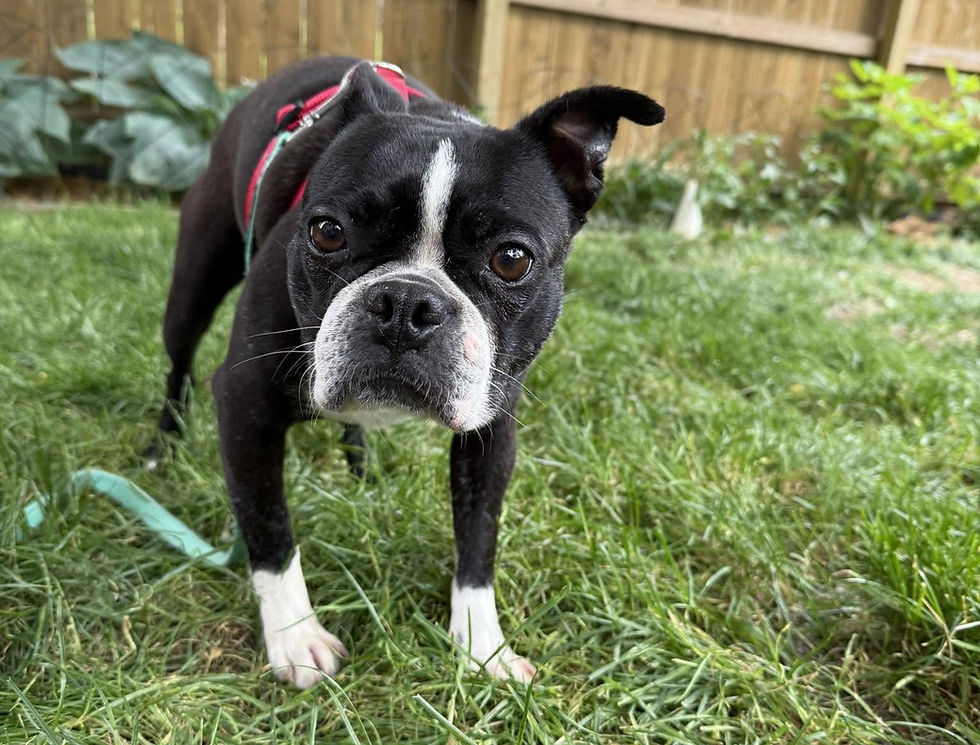
Leash training a puppy mill dog requires extreme patience and positive reinforcement. You placing a leash on your mill dog may be their first experience with one.
Forcing a mill dog to walk will destroy the trust you are trying to build and can cause them to shut down completely. Let them set the pace. Remember patience is key.
These steps can also apply to any dog that does not have experience walking on a leash.
NOTE: Having your mill dog walk on a leash is not a priority within the first couple of months of adoption. It is important that trust between the dog and human has been established and is a strong one. The mill dog should see the human as a security blanket. This will make training of any kind a smooth and less frustrating experience.
Step-by-Step Desensitization
Use a Harness: Never attach a leash directly to a collar especially on dogs with flat faces. Harnesses are recommended placing the pressure on their shoulders and not compromising breathing or choking.
Drag Method: Let the dog wear the harness with a light nylon leash attached while indoors. DO NOT use Retractable Leashes. The leash can remain on them for an hour at a time or all day. Supervise them to ensure it doesn't get snagged.
Moving Outdoors
For most puppy mill survivors, the outside world is incredibly overwhelming. To safely transition this training outdoors:
Start in a Secure Area: Begin in an enclosed backyard or a quiet indoor hallway before ever attempting a neighborhood walk.
Observe: If you have or know a confident dog that is leash trained invite them on the walk. Monkey see, monkey do. Your mill dog will follow behind as the confident dog shows the way.
a) If you do not have another dog to include have your mill dog’s security blanket human walk in
front of them, while another human is holding the leash from behind. The mill dog can focus
on the human in front of them.
b) Gently encourage the dog to take a few steps toward you using a high-value treat (like boiled
chicken or hot dogs-one with lots of aroma). Reward them the second the leash goes slack.
Stop and reward every few steps.
Keep Sessions Short: Practice two to three times a day for only 5-10 minutes at a time. End every session on a positive note.
Lure and Reward: If your dog is food motivated find a treat or piece of food with high aroma. Gently encourage the dog to take a few steps toward you using a high-value treat (like boiled chicken or hot dogs-one with lots of aroma). Reward them the second the leash goes slack. Stop and reward every few steps.
Be Prepared to Retreat: If the dog plants their feet, shakes, or cowers, do not force them. Pick them up if you are in an unsafe area and return indoors. Reminder: let them set the pace


Comments